
You Can’t Declutter Your Parent’s House For Them. People Have Tried.
To help someone declutter their home, let them stay in charge of every decision while you handle the heavy lifting. Start with one small, low emotion space, ask questions instead of giving orders, and get the donate pile out of the house the same day. Patience beats speed every single time.
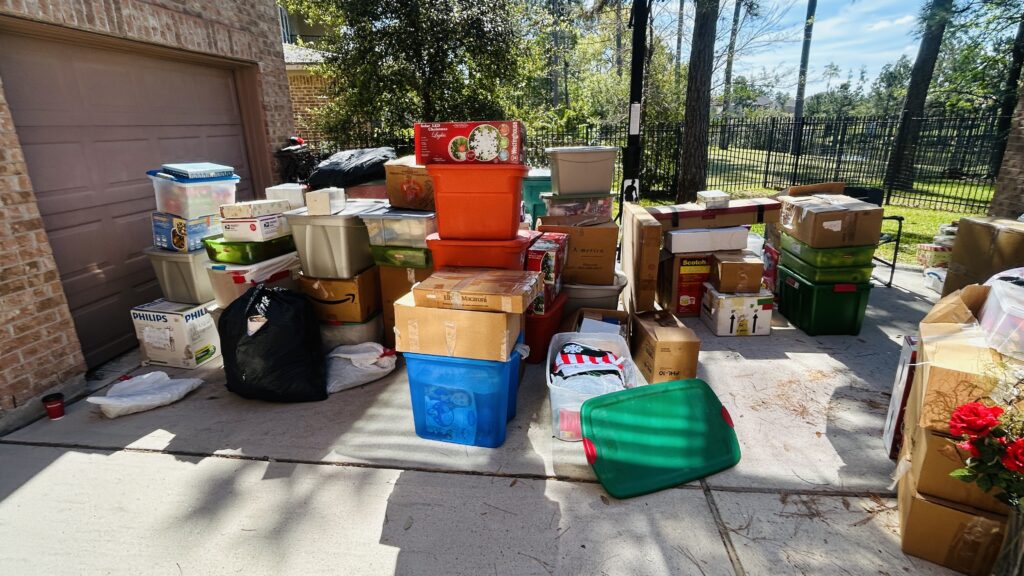
Somebody Googled how to help someone declutter their home, and I’d bet money that somebody is standing in a parent’s garage right now. Maybe it’s mom’s. Maybe it’s dad’s. Either way, there’s forty years of stuff, one of you, and a lot of opinions about margarine tubs.
I’m a professional organizer, which means I usually get the call after the family meeting went sideways. So here’s what actually works, and what gets you uninvited from Sunday dinner.
Why Does Helping a Parent Declutter Turn Into a Fight So Fast?
Because you think you’re talking about stuff, and they think you’re talking about their life.
To you, it’s a closet full of shirts that haven’t fit since the Clinton administration. To your parent, every one of those shirts is a year they lived. So when you walk in with trash bags and a plan, what they hear is “your life is clutter and I’m here to bag it.”
There’s also control. As people get older, the list of things they get to decide keeps shrinking. Doctors decide things. Insurance decides things. Their knees decide things. The house is one of the last places where they’re still the boss, and here you come with a label maker.
What Should You Never Say When You Help Someone Declutter?
A short list, written by every adult child who has tried this and lived to tell about it:
- “You don’t need this.” They didn’t ask.
- “Nobody wants this.” Now they’re keeping it out of spite. Watch.
- “This is junk.” It was a wedding present.
- “We have to finish today.” Congratulations, it’s a hostage situation now.
- “I’ll just do it while you’re at the doctor.” Please don’t. That one breaks trust for years.
Instead, swap the statements for questions. “Do you still use this?” “Who would love this?” “Where should this live?” Questions keep them in charge, and people who feel in charge make faster decisions. Funny how that works.
How Do You Help Someone Declutter Without Making It a Whole Thing?
Start smaller than feels reasonable. Then go smaller.
- Pick a low emotion space first. The linen closet, the bathroom cabinet, the junk drawer. Not the photo boxes and definitely not dad’s workbench. Stack up a few easy wins before you touch anything with a memory attached.
- Keep sessions short. Two or three hours is plenty. Decision fatigue is real, and after hour three everything turns into a “maybe.” Maybe is where stuff goes to live forever.
- Let them hold the item. You hold the bag. They make the call. Your job is logistics, not verdicts.
- Give it a reason that belongs to them. “So you don’t trip in the hallway” lands better than “because it’s a lot.” A safer house, an upcoming move, room for the grandkids. Their why, not yours.
- Get it out the same day. A donate pile that sits in the garage overnight gets shopped. Ask me how I know.
If your parent is also facing a downsizing move, AARP has a solid breakdown on decluttering before a big move. Same idea: small spaces, real decisions, and no maybe pile.
“This Will Be Your Problem When I Die”
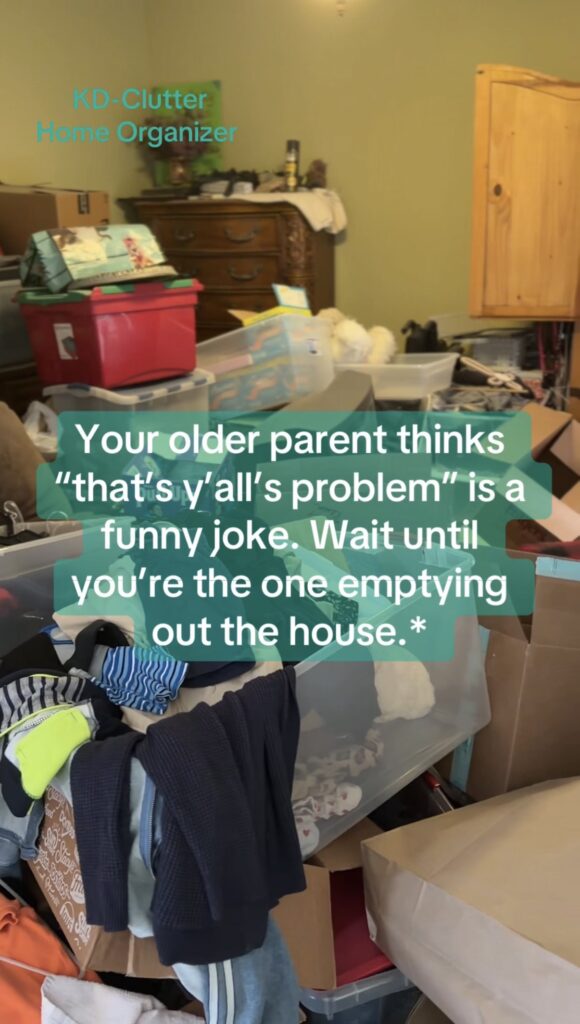
I had a client trying to help her dad clear out his house. Smart woman, organized, loved him to pieces. She came in with a plan and a schedule. About two hours in, after one too many “do you really need this,” he put both hands up and told her, “This will be your problem when I die.”
Then he walked out of the room. And honestly? I didn’t blame him.
He wasn’t being stubborn for fun. He was overwhelmed, frustrated, and worn out from defending every coffee mug. That line wasn’t really about the house. It was a white flag with a side of guilt trip.
So we stopped. Nothing else got touched that day. Next visit, we changed the rules. He picked the room. He made every call. His daughter ran bags to the car instead of running the meeting. Turns out a man who won’t part with a socket set will happily tell you the story behind it, and then hand it to his grandson.
Here’s the part that stings. He wasn’t wrong. If it doesn’t get handled now, it gets handled later, by you, while you’re grieving, with a rented dumpster in the driveway. Doing it together, slowly, while they can still tell you the stories, is the kinder version for everybody. I wrote more about that in decluttering before your parents pass.
How Do You Handle Sentimental Items When You Help Someone Declutter?
Sentimental stuff is where the whole project either moves or stalls, so slow down here.
- Ask for the story first. Once the story gets told, the object often matters less.
- Take a photo. A picture of grandma’s china holds the memory without needing a hutch.
- Keep the best one, not all twelve. One great quilt beats a closet full of them.
- Offer it to family, with a deadline. Your cousin saying “oh, I’ll come get it” means nothing. Two weeks, then it gets donated.
- Save the hardest box for last. Maybe last month. That’s fine.
I’ve written about why letting go of an object can feel like losing the memory itself, and how to keep one without the other, in my post on why letting go feels so hard.
Where Does All the Stuff Actually Go?
This is where most attempts to help someone declutter quietly fall apart. Everybody agrees on the donate pile, and then it lives in your trunk until Easter.
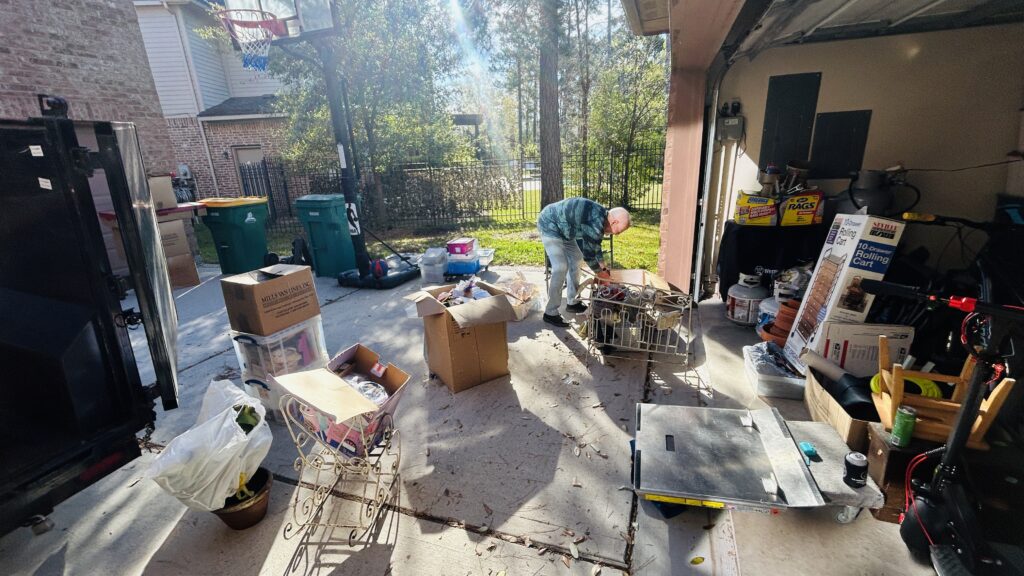
That’s exactly why I started KD Discard and Donate. We sort it, haul it, and get it to its actual final destination, so it’s not riding around in your car for a month. Bonus: a lot of parents let go faster when they know the recliner is going to someone who needs it instead of a landfill.
When Should You Call a Professional Organizer?
Call in backup when any of these sound familiar:
- You’ve had the same argument three times
- The house has to be ready for a move or a listing by a real date
- You work full time, have kids, or live two hours away
- Walkways are blocked and falls are a real worry
- Your relationship with your parent matters more than winning the garage
When you help someone declutter and that someone raised you, you are never neutral. I am, and that changes the whole energy. Your dad will argue with you about a lamp for twenty minutes. He’ll let it go for me in ten seconds. It’s not that I’m better. I’m just not his kid.
And once the space is cleared, it needs a system that fits how your parent really lives, or you’ll be back here in a year. I broke that down in who’s actually responsible for keeping an organizing system running.
Frequently Asked Questions
Stop pushing and start asking. Let them choose the space, make every decision, and set the pace. Start with something low emotion, like a bathroom cabinet, and keep sessions short. People resist being told. They rarely resist being asked.
Trade statements for questions. Ask “Do you still use this?” or “Who would love this?” instead of “You don’t need this.” Tie the work to something they care about, like safety or room for the grandkids, so it’s their reason and not yours.
Start with the space that holds the fewest memories, like a linen closet, junk drawer, or bathroom. Quick wins build trust and momentum. Leave photos, keepsakes, and anything tied to a spouse or career for later.
It depends on how much is there and how fast your parent makes decisions. A single closet can take an afternoon. A house that’s thirty years deep usually takes several sessions spread over weeks. Short, steady sessions beat one exhausting weekend every time.
Ask for the story behind the item first, then photograph it. Keep the best piece from a collection instead of all of it, offer items to family with a firm deadline, and save the hardest boxes for last.
If walkways or exits are blocked, food is spoiling, or your parent is extremely distressed at the thought of anything leaving the house, it may be more than an organizing problem. Talk with their doctor, and bring in help that handles safety first.
At KD Clutter, pricing is hourly on a sliding scale based on the project, with a four hour daily minimum, and you’re only billed for the hours actually worked. It starts with a free in person consultation, so you know what you’re dealing with before you commit.
Ready to Stop Being the Bad Guy?
If you’re tired of fighting over the garage, let me be the neutral one. I’ll keep your parent in charge, keep the project moving, and get the donate pile out the door for good. Call me at 832-387-8355 or book your free consultation.
We work with families across Klein, Tomball, Hockley, The Woodlands, Spring, Cypress, Bridgeland, Katy, Conroe, Humble, Magnolia, and the Houston area.
KT Wood is the owner of KD Clutter, a home organizing and staging company based in Tomball, Texas. She’s a Certified Home Stager and TREC Certified Instructor serving Klein, Tomball, Hockley, The Woodlands, Spring, Cypress, Bridgeland, Katy, Conroe, Humble, Magnolia, and the greater Houston area.