Ask ten people what the hardest thing to get rid of is and you will get ten different objects. A wedding dress. A dead relative’s recliner. A treadmill wearing a full wardrobe of clean laundry. But ask a professional organizer, and we will tell you it is never actually the object. The object is just where the real problem parks itself.
The hardest thing to get rid of when decluttering is never actually a thing. It is the feeling attached to it: guilt over money spent, grief over who gave it to you, or fear that you will need it someday. Sentimental items, aspirational purchases, and expensive “just in case” stuff top the list every single time, because they are not clutter problems. They are emotional decisions wearing a physical disguise.
I have walked through hundreds of Houston-area homes at this point, and the sticking points are shockingly predictable. So let’s go through them, why your brain fights you on each one, and what actually works.
Why Are Sentimental Items the Hardest to Get Rid Of?
Handwritten cards. Kids’ artwork. A parent’s furniture. These items win the “hardest to toss” award every time, and there is a real reason for it, not just a willpower problem.
It is called the endowment effect. The moment something becomes yours, your brain quietly reprices it as more valuable than it actually is, simply because you own it. Getting rid of it does not feel like clearing a shelf. It feels like taking a loss. Add a memory or a person to that item, and you are not decluttering anymore. You are grieving in your hallway with a donation bag in your hand.
That is not dramatic. That is just what is happening neurologically, and it is exactly why sentimental items should never be the first thing you tackle in a decluttering project. Start somewhere easier and build the muscle first.
What Is Aspirational Clutter, and Why Do We Keep It?
This is the sewing machine you were going to learn on. The guitar. The stack of books for the person you were going to become this year. Aspirational clutter is anything you are keeping not because you use it, but because getting rid of it means admitting you are not going to become that version of yourself, at least not with that object’s help.
That admission stings. So the sewing machine stays in the closet for six more years, still in decent shape, still doing absolutely nothing for anyone. Letting it go does not mean you failed. It usually just means your priorities shifted, which is a normal thing that happens to functioning adults.
Why Do We Keep Things Just Because They Were Expensive?
Because it feels wasteful to get rid of something you paid good money for, even if you have not touched it in years. This is loss aversion at work, and it is one of the strongest forces in decluttering. Your brain treats “I already spent the money” as a reason to keep something, when in reality that money is already gone. Keeping the item does not get it back. It just gives the item a second job as a guilt reminder that lives in your closet.
The math that actually matters is simple. What did this cost you to keep it another year in space, time, and mental energy versus what you already lost by buying it. Once you separate those two questions, the “it was expensive” excuse loses most of its grip.
What About Inherited Furniture and Family Heirlooms?
This is its own category, and it deserves its own honesty. Inherited items come loaded with more than sentimental value. They come with a sense of obligation, like keeping grandma’s china cabinet is somehow required to prove you loved her.
It is not. You are allowed to keep the pieces that genuinely mean something to you and let go of the ones you kept out of guilt. I wrote a whole piece on this because it comes up constantly with clients dealing with a parent’s estate. If that is where you are right now, I go into it in more detail here, and I say this as someone who has lived it, not just organized around it.
Why Is It So Hard to Toss Kids’ Artwork and Old Schoolwork?
Because every macaroni collage feels like proof your kid was small once, and none of us are emotionally prepared for how fast that goes. The problem is that if you keep every single piece, you do not end up with a meaningful collection. You end up with a storage bin nobody opens.
The fix that actually works is picking a container size first, not a piece count. A single bin per child, per school year if you want to be generous. When it is full, the newest pieces earn their spot and the rest get photographed and released. That way the memory survives even when the paper does not.
What Actually Works When You Are Stuck on the Hard Stuff?
A few things, and none of them require you to become a heartless minimalist overnight.
Give sentimental items a holding pattern instead of an instant decision. Put the “I am not sure yet” pile in a box, date it, and put it away for six months. If you never went looking for it, that is your answer.
Photograph the memory and release the object. Researchers at Cornell actually tested this, and downsizing became noticeably easier for people once they took a photo of an item before letting it go. You can read about that study here. The photo satisfies the part of your brain that wants to hold on, without the object taking up a shelf for the next decade.
Pick a representative, not the whole collection. You do not need every card grandma ever sent you to remember her. You need the one that sounds like her.
And bring in a second set of eyes when you are truly stuck. This is not a sales pitch, it is just true: decluttering alone is genuinely harder than decluttering with someone who is not emotionally tangled in your stuff. Objectivity is the one thing you cannot give yourself.
Even Professional Organizers Get Stuck on This
I help people do this for a living, and I still have a box in my own closet I have moved four times without opening. So if you are stuck on something and feel ridiculous about it, you are in normal, human, extremely well-populated company. The goal was never to feel nothing about your stuff. The goal is to stop letting the hard ten percent hold the other ninety percent hostage.
Frequently Asked Questions
What is the hardest thing to get rid of when decluttering?
It is rarely a specific object. The hardest things to release are sentimental and heirloom items, aspirational purchases tied to a version of yourself you have not become, and expensive items you feel guilty letting go of. All three are emotional decisions, not organizing decisions.
Why can’t I get rid of sentimental items?
Because of the endowment effect. Owning something makes your brain value it more than it is objectively worth, and adding a memory or a person to that item multiplies the pull. It is a real psychological response, not a personal failing.
What is aspirational clutter?
It is anything you are keeping because of who you hoped to become, not because you actually use it. Think unused hobby supplies, workout equipment, or “someday” books. Letting go can feel like admitting defeat, even though it usually just means your life moved in a different direction.
Why do I feel guilty getting rid of an expensive item I never use?
That is loss aversion. Your brain wants to justify the original purchase by keeping the item around, even though the money is already spent either way. Keeping it does not undo the cost. It just adds ongoing clutter to a decision that is already over.
Should I keep furniture I inherited but do not actually like?
Only if it genuinely adds value to your life or holds real meaning for you. Inheriting an item is not an obligation to display it forever. You are allowed to keep the pieces that matter and let the rest go, guilt free.
How do I get rid of kids’ artwork without feeling like a terrible parent?
Set a container size instead of trying to keep everything. Photograph pieces that do not make the cut so the memory survives without the paper pile. Your child will remember being loved, not whether you kept every worksheet from second grade.
What is the six month “maybe box” method?
You put items you are unsure about into a labeled box, date it, and store it out of sight for six months. If you never think about it or go looking for anything inside, that is your sign it is safe to donate or toss without a second round of guilt.
Is it normal to feel stressed or emotional while decluttering?
Completely normal. You are making dozens of small emotional decisions in a row, in the same home you live in, often alone. That combination wears almost everyone down, which is exactly why bringing in help changes the experience so much.
Do I have to get rid of everything to make progress?
No. Decluttering is not about owning nothing. It is about making sure the things you keep are things you actually want, not things you are keeping out of guilt, fear, or habit.
Ready to Deal With the Hard Stuff, With Backup
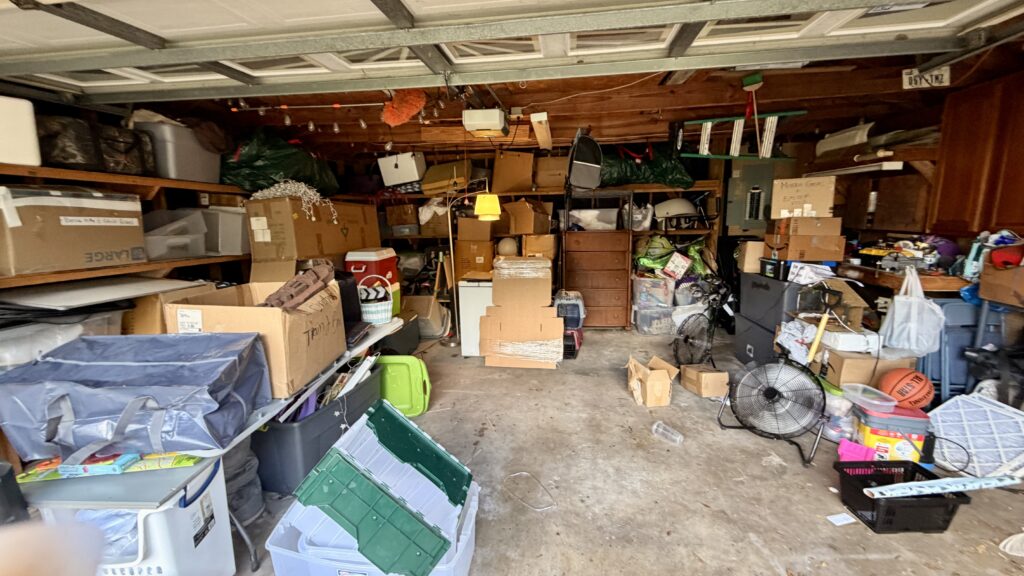
If you have a closet, a garage, or a room in your house that you avoid because you know it is full of the hard decisions, that is exactly the project I am built for. No judgment, no lectures, just someone in the room with you who is not emotionally tangled in your stuff.
Call or text: (832) 387-8355
About the Author
Katie Wood is the owner of KD-Clutter, a professional home organizing company rooted in Klein, Texas and serving Tomball, Hockley, The Woodlands, Spring, and the surrounding Houston suburbs including Cypress, Bridgeland, Katy, Conroe, Humble, and Magnolia. She is a Certified Home Stager and TREC Certified Instructor who has helped hundreds of Houston-area families reclaim their spaces. As a single mom and small business owner, she brings a no-judgment, no-nonsense approach to every home she walks into.
Call or text: (832) 387-8355
katie@kdclutter.com