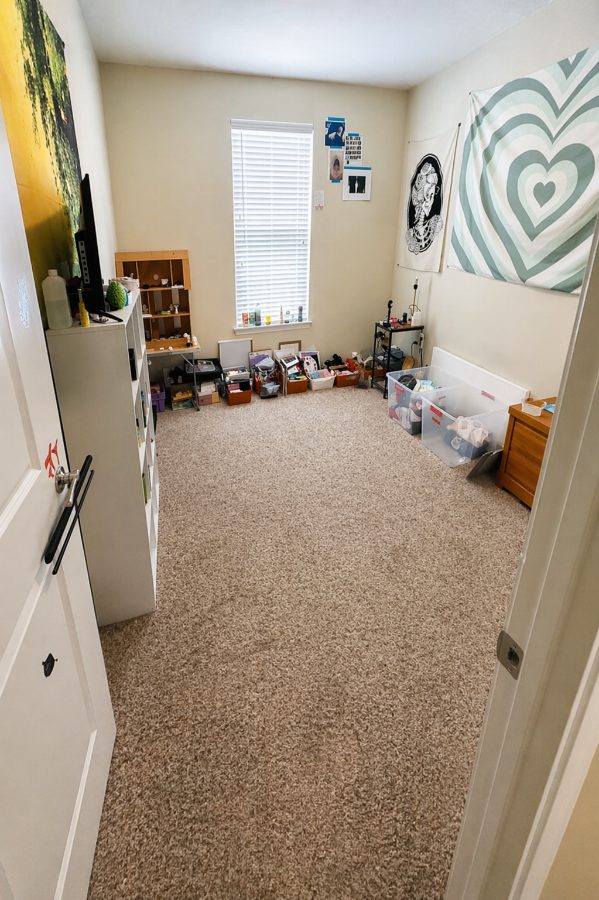
Why Decluttering Feels Impossible With an ADHD Brain
This isn’t a discipline problem. ADHD affects executive function, the part of your brain in charge of planning, starting tasks, and remembering steps in order. That’s the exact toolkit decluttering requires, which is why a task that sounds simple on paper turns into three hours of standing in a room holding one object.
Out of sight really does mean out of mind. Storage bins with lids are where things go to die, because your brain needs to see something to remember it exists. That’s not laziness, that’s object permanence with an ADHD brain, and it’s why so many pretty organizing systems fail within a month.
Decision fatigue hits faster too. Every item in a pile is a decision: keep, donate, trash, maybe later. A neurotypical brain can grind through that all day. An ADHD brain runs out of decision making fuel fast, and once it’s gone, the whole project stalls, sometimes for months.
None of this means something is wrong with you. It means the standard advice was written for a brain that isn’t yours.
Frequently Asked Questions
Will you judge how bad it got?
No. I live this too. You do not owe me an explanation for how the house got here.
Does body doubling actually help if I have ADHD?
For most people, yes. Having someone else in the room working alongside you keeps the task from feeling impossible.
What if I have tried everything already?
Then we are not starting with another color coded system that falls apart in two weeks. We build something realistic instead.
Do you work with kids too?
Yes, both kids and adults with ADHD.
Is ADHD disorganization actually different from just being messy?
Yes. It is tied to executive function, not effort or character. Two people can want an organized home equally, and one will still struggle far more. That is neurology, not motivation.
Why do the systems from Pinterest or influencers never stick for me?
Most of those systems assume you will maintain a multi step process every day. ADHD brains do better with fewer steps and visual cues, not more categories and more decisions.
Do you diagnose or treat ADHD?
No. I am not a doctor or a therapist. I build physical systems around how your brain already works. If you want a clinical diagnosis or treatment, that is a conversation for a medical professional.
Will I need to keep up a complicated system after you leave?
No. If it takes more than a few steps to maintain, it will not survive real life. Everything I build is designed to still work on your worst week, not just your best one.